
TEA’s Advanced Biblical Counseling courses are focused on preparing believers to solve spiritual problems with biblical truth.

Overview
TEA’s Advanced Biblical Counseling courses aim to equip a generation of biblical counselors to know how to help others using God’s Word. We teach students the mechanics of biblical counseling and its theological foundations, how to apply it first to yourself, and then how to help others who are struggling do the same.
These offerings also prepares the student to obtain certification with the Association of Certified Biblical Counselors (ACBC). After completing all courses, TEA will assist the student in preparing for and applying for ACBC certification.
This particular version of TEA’s Advanced Biblical Counseling is modular, intensive format. It is being offered in partnership with Biblical Counseling Ministries Worldwide.
Click Here for Full Program-Level Objectives
- Demonstrate the correct application of hermeneutical principles to develop an interpretation of a biblical text including how to legitimately apply the text to personal problems.
- Explain the foundational theological principles of biblical counseling with particular focus on the doctrines of inspiration, inerrancy, and sufficiency of the Scriptures, leading to the ability to biblically interact with and respond to current trends, conceptual approaches, and practices in the counseling field in their cultural context.
- Explain from Scripture the role of biblical counseling within the larger work of the church; particularly its relationship to evangelism and discipleship.
- Develop a counseling methodology that effectively applies a broad range of relevant biblical passages to counselee issues; in particular core issues of the heart, and understanding the centrality of the gospel as the basis for biblical change that leads to true worship.
- Demonstrate a consistent pattern of self-reflection leading to growth in the character qualities necessary for effective biblical counseling.
- Develop, practice and demonstrate the competencies necessary for effective counseling.
The whole degree is framed around four C’s—Content, Christ like character development, Competencies, and the centrality of local church community (Romans 15:14).
How to Apply
The application deadline passed on March 2, 2026. If you would like to be contacted if and when a second batch is announced, please contact us.
Program Format and Location
The TEA Advanced Biblical Counseling program is 39 units and spans 3 years, offered in a modular format. The batch will meet 2 weeks at a time, twice a year, typically in March or April and then again in August or September. Each 2-week module includes 2 courses. One course the first week (Mon-Fri) and then another course the second week (Mon-Fri). See the FAQs for the sample module schedule.
The Advanced Biblical Counseling student should be prepared to set aside 15-20 hours for reading and assignments per week for 15 weeks following each module. All assignments are due after each module (but before the next module) unless stated otherwise by each professor.
All classes will be in-person at Higher Rock Christian Church unless otherwise stated. No courses will be offered online.
Higher Rock Christian Church
3rd Floor ESNA Building, 30 Timog Ave, Quezon City, 1103 Metro Manila
Courses and Instructors for March 2026
BC505 – Hermeneutics for Biblical Counseling
Dates: March 16-20, 2026
Professor: Dr. Andrew D. Rogers

Dr. Andrew Rogers has been married to his wife, Jenny, since 1994, and they reside in Northern California. They are blessed with two married sons, two daughters, a son-in-law who will soon join the family, one grandson, and twin granddaughters who are quickly expected.
Dr. Rogers has devoted more than thirty years to pastoral ministry, higher education, and global missions. His ministry is marked by a deep commitment to discipleship and to equipping God’s people for faithful and effective service in the church. He and his wife currently serve as full-time missionaries with Biblical Counseling Ministries Worldwide, where Dr. Rogers serves as Executive Director.
He holds master’s degrees from The Master’s University and Seminary, as well as a Th.M. and Ph.D. from The Southern Baptist Theological Seminary. Dr. Rogers also serves as a Fellow and Board Member of the Association of Certified Biblical Counselors (ACBC).
Course Description
This course provides advanced instruction on the principles of sound biblical interpretation and application.
- Be introduced to and be able to evaluate historic and contemporary hermeneutical methodologies and the ramifications for biblical counseling.
- Identify and collect observations on the historical backgrounds, literary context, grammar, and word study of a given biblical passage.
- Identify the process and flow of interpretation in order to make legitimate applications from Scripture.
- Discern hermeneutical fallacies by analyzing the common mistakes made by others in interpreting biblical passages.
- Synthesize and analyze observations of a given biblical passage to describe the author’s intent of particular verses in context.
BC501 – Introduction to Biblical Counseling
Dates: March 23-27, 2026
Professor: Dr. Kent Langham
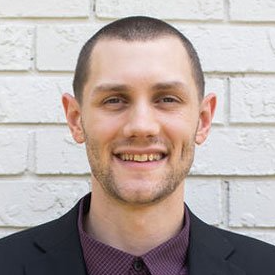
Kent is the Pastor of Counseling and Discipleship at The Cross Church in Pensacola, FL. He received his Dedmin in Biblical Counseling from the Southern Baptist Theolgical Seminary in 2023 and has been certified with ACBC since 2020. He and his wife Molly have four children.
Course Description
This course offers a general introduction to biblical sufficiency-based personal ministry. The biblical basis for biblical counseling will be examined, biblical counseling will be defined, and the goal of biblical counseling will be explained. Biblical counseling will be distinguished from both humanistic, psychologically based systems and evangelical integrationist theories. The essential qualities of an effective soul care provider will be detailed
- Articulate biblical principles that will promote an enriched and improved personal life, and relationship with Christ as life is understood through the lens of being an active worshiper.
- Articulate a working understanding of the basic concepts, presuppositions, and distinctive features of biblical counseling.
- Identify and begin to demonstrate personal qualities necessary for effective counseling.
- Give a detailed biblically-supported explanation of the key differences between biblical counseling and all other kinds of counseling, especially seeing biblical counseling in light of making disciples.
- Identify and describe an individual’s personal problems from a distinctly biblical perspective.
- Describe a practical framework for evaluating the counseling process from a biblical perspective.
Future Courses in the TEA Advanced Biblical Counseling Program
BC506 – Biblical Counseling and Theology
This course offers a consideration of the theological issues that form the basis of a biblical approach to personal ministry. It will consider the theological, anthropological, and soteriological presuppositions of treatment theory and seek to bring a thoroughly biblical critique to their foundational assumptions and methodology.
- Describe the inherent connections between good theology, godly living, and biblical counseling.
- Articulate the key theological principles that form the foundation and framework for our counseling methods and strategies. In particular, the student will be able to articulate the centrality of the doctrine of sanctification to biblical counseling.
- Trace the relationship between specific counseling cases and incorrect theological understanding.
- Demonstrate a pattern of thinking theologically about people, their problems, and the solution to those problems as he/she completes the ACBC counseling and theology exams.
- Self-assess the extent to which his/her approach to helping people is a reflection of and consistent with his professed theological convictions.
- Objectively evaluate the implications of particular theological convictions and counseling systems as philosophies in relation to counseling problems and situations.
- Articulate a researched and reasoned defense of the doctrine of the sufficiency of Scripture.
- Suffering is central to scripture and therefore central to our counseling. The student should have a robust understanding of the sovereignty of God in relationship to pain and how to lovingly comfort those who are suffering. Teaching students the importance of lament will be a key concept in the class.
- By the end of the course the student should be able to understand and evaluate the common grace and general revelation arguments of integrationists.
BC508 – Methods of Biblical Counseling
This course provides an overview of a comprehensive, biblical, methodological model for promoting God-glorifying change in people. It also details specific procedural aspects of the ministry skill of biblical counseling.
- Biblically articulate the rationale for assigning and designing appropriate homework.
- Describe and practice a practical framework for the counseling process.
- Articulate the key foundational principles that form the basis for biblical counseling theory and practice, with particular emphasis on the significance of relationship skills and the priority of loving others.
- Accurately analyze counseling case studies.
- Describe the importance of the use proper forms, and describe basic legal issues related to counseling especially in light of their cultural context.
- Demonstrate and practice proper question asking, the use of forms, and other necessary relationship skills.
- Theologically assess the methodologies of other counseling systems.
- Understand the change process as growth toward Christ likeness. In particular, the student should be able to understand the put off, be renewed in the spirit of the mind and put on process from Eph. 4.
BC520 & BC521 – Problems and Procedures I and II
This course will address a variety of the challenges faced by Christians. These may include but not be limited to the following: the nature of Christian life, anger, fear, depression, homosexuality, anxiety, eating disorders, incest, child abuse, counseling youth, crisis counseling, the role of women in counseling and issues unique to women, and legal issues in counseling. [domestic abuse needs to be added]. It will also explore the common counseling problems and situations faced by the pastor and detail some possible pitfalls especially faced in today’s social environment. Particular issues of the cultural context will be explored.
- Articulate biblical principles that will promote an enriched and improved personal life and relationship with Christ.
- Explain how all of life, including problem areas, are part of the worship process that takes place within the heart of man.
- Give a biblically-supported defense of the sufficiency and superiority of the Scripture for handling all the personal and interpersonal problems of life by looking at advanced, complex counseling issues.
- Describe the centrality of the gospel and the role of counseling within the local church for dealing with complex problems in a believer’s life.
- Complete in-depth Scriptural and secular research of complex life problems.
- Introduction to legal issues and forms.
BC525 – Marriage and Family Counseling
This course will consider such issues as marriage as a covenant, the biblical purpose of marriage, dating/courtship, functions of a family, premarital counseling, complementarian marital roles, communication, conflict resolution, financial counseling, counseling victims of spousal abuse, rebuilding a marriage after an adulterous affair, biblical principles governing sexuality, and parent/child relationships. A marriage counseling methodology will also be taught.
- Identify and describe, with biblical support, key ingredients that promote a God-honoring covenant view marriage and family life and the superiority of His design for marriage.
- Explain how all of life, including problem areas, are part of the worship process that takes place within the heart of man.
- Give a biblically-supported defense of the sufficiency and superiority of the Scripture for handling all the personal and interpersonal problems of life within marriage and the family.
- Articulate the complementarian understanding of roles and be able to biblically evaluate egalitarianism.
- Identify biblical passages, principles and processes that provide a distinctly biblical way of looking at people and their problems within the context of marriage and family.
- Articulate key principles for making a wise choice of a spouse.
- Use biblical principles to self-assess his/her own relationship skills and character traits as a product of his/her heart, and continue to develop godly heart-worship, relationship skills, and character traits.
- Understand and assess attitudes toward and the state of marriage in their country.
- Understand how to deal with domestic abuse and other crisis marriages in their cultural context.
- By the end of the course develop a biblical position on divorce and remarriage.
BC526 – Biblical Counseling in the Local Church
This course provides instruction on how to develop a local church corporate culture of personal discipleship, how to select and equip counselors in and for the local church, and how to establish a local church biblical counseling and training center.
- The student will be able to articulate what it means that a church is a church of biblical counseling not just has a biblical counseling ministry.
- Describe how biblical counseling, worship and The Great Commission have the same goals.
- Understand the role of the pastor and other leaders in shepherding soul care issues.
- Articulate the role of church members in one another’s lives.
- Explain how to develop a counseling ministry.
- Understand how to develop a counselor/discipler equipping ministry.
BC527 – Biblical Counseling and Medical Issues
This course is a survey of the physiological factors that influence areas in a person’s life that may be of importance when counseling.
- By the end of the course the student will understand a theology of the body.
- Be able to articulate the role of a biblical counselor and the role of a health care professional.
- Understand how care for the body fits into local church discipleship ministry.
- Be introduced to a basic understanding of the brain and how to understand current research.
- Have a basic comprehension of psychotropic medicines and their effects.
BC528 – Biblical Conflict Resolution
- Articulate the key foundational principles of a biblically-based approach to conflict resolution, and marriage conflict counseling.
- Identify the key theological principles relating to inter-personal conflict that provide a framework to enable a person to respond as worshiper of God and grow in personal sanctification.
- Explain, with biblical support, how an individual’s heart worship shapes his/her relationship skills, and character traits. The dynamics of relationships.
- Describe the key ingredients to preparing for and leading a godly, gospel-oriented mediation.
BC530 – Counseling Case Studies and Observation
- By the end of the course the student will be able to proficiently use diagrams taught in previous classes to analyze case studies.
- Identify key methodologies demonstrated in observing role plays or videos.
- Proficiently use the I’s methodology to evaluate observed counseling.
BC535 – Counseling Practicum
This course helps students learn counseling skills through the use of role-play and peer evaluation. It will include student participation in counseling as an observer, a counselor, and counselee. The student’s counseling activity will be both peer and instructor reviewed.
- Apply biblical counseling principles to specific case study situations and common personal problems.
- Articulate proper relationship skills and methodologies for effective counseling.
- Analyze and critique counseling role-play scenarios in light of biblical counseling principles.
- Practice using proper forms.
BC536 – Counseling Research Project
The purpose of the course is to have the student demonstrate the ability to research and develop an extended outline on a counseling topic relevant to life and ministry. This can be a topic that is culturally relevant or one that will develop the understanding of biblical counseling in his or her cultural context.
- By the end of the course the student will have developed a 25-30 page double spaced outline utilizing at least 20 sources on a counseling topic relevant to his or her culture.
- The student should demonstrate proper exegesis and application.
Program Professors:
Dr. Andrew Rogers, Dr. Stuart Scott, Dr. Adam Tyson, Dr. Brian Pikul, Dr. Matt Rehrer, Dr. Kent Langham, Dr. Don Roy, Dr. Ernie Baker.
Note: professors are scheduled based on availability.
Tuition Fees
₱3,500 per course, or ₱7,000 covers the two-week module. The total cost for the entire three-year program is ₱42,000.
What’s Included in the Tuition:
- Course registration
- Access to Canvas, TEA’s Learning Management Software (LMS), including course materials, resources, and class recordings.
- Access to The Expositor’s Academy Electronic Resource Library (ERL) with over 3,000 hand-selected theological e-book resources, in partnership with The Master’s Seminary and The Master’s University.
What’s NOT Included in the Tuition:
- Accommodations/Housing
- Meals
- Some course textbooks
- A special Logos library license is optional but may be availed for an additional ₱5,500 per year for three years. See the TEA Logos page for more info.
Frequently Asked Questions
- What language is the instruction, discussion, and reading?
All instruction and reading will be in English. All assignments by students are required to be submitted in English. - Can I join the program mid-way?
The program is designed to be taken from beginning to start. Students may not join the program mid-way. TEA launched its first batch in March 2026. Consideration for a second batch is still to be decided. If you would like to be contacted if and when a second batch is announced, please contact us. - What books do I need to acquire for the program?
Most books will be provided via the TEA Electronic Resource Library (ERL). Access is granted free for any student of TEA. Required resources not available in the ERL will be made available either for free or at cost. TEA is committed to keeping costs as low as possible for its students. - What is a typical two-week module schedule?
Week 1 – Mon-Fri – Class #1
8AM-12NN class
12-1PM lunch
1-5PM class
Sat-Sun – Off
Week 2 – Mon-Fri – Class #2
8AM-12NN class
12-1PM lunch
1-5PM class - What are some options for hotels near the teaching location?
Click here - Can I enroll to take the program online?
This version of the Advanced Biblical Counseling program is designed to be taken in-person. For online courses, please see the TEA Equip Biblical Counseling courses. - If I reside outside of the Philippines, may I enroll and attend the program in-person?
Yes! You may enroll if you reside outside of the Philippines. Students in this situation will be responsible for their own flights, accommodations, and other logistics. - Is the program accredited?
This program is focused on preparing biblical counselors to effectively help others using God’s Word and prepares them to seek ACBC certification. It does not have any academic accreditation.